So much enthusiasm. So fired up. Shot out of a cannon. Every day.
“The buck stops here” rang through my thoughts each day as I walked across the parking lot & into my office. I played out all sorts of unexpected scenarios – the “What if’s?” – each morning just in case anything popped onto my radar that day that I wasn’t anticipating.
That was me as a young Head Coach of an NCAA Lacrosse program. I thought I had it all figured out.
The thing was there was still so much experience to gain, wisdom to absorb, & knowledge to soak in.
Thankfully I realized that the best were always working their craft & striving to get better. While I could anticipate various situations hypothetically I actually needed to learn from experience. I needed to learn from others while being in charge of my own program.
Challenges Are Fun
I’m truly grateful that I get to embrace challenges. I know some who don’t, & that just wouldn’t fit for me. I thrive when I’m learning something new.
I ran an NCAA Lacrosse program for 22 years as a Head Coach, after 7 years in various Assistant Coaching roles. I can say with confidence that I got better along the way. I evolved, changed, adapted, & improved. Most importantly I wasn’t afraid to try new things.
I landed my 1st NCAA Head Coaching position at 29 years old; most of my roster was less than 10 years younger than I was. I wanted to establish clear boundaries, & worked diligently to be an authority figure. I was decisive & never flinched. Early on I was adamant that it was my program, & damn the torpedoes it would be full speed ahead.
I had a vision, standards, & a culture to establish. My fingerprints were all over every aspect of our program, & I didn’t trust anyone else to do the job right. I did it all myself, & thought that was OK.
Luckily I realized that to be great I needed to develop, to gain experience, but most importantly that I needed to learn. Learning on the job as a Head Coach can be tricky. On one hand you want to show that you are in charge & that you are capable of doing the job well. On the other you want to learn, develop, & grow in your role both for your own good but also for the good of the program.
It takes humility to learn on the job, to admit you don’t know everything. One of the greatest things about the coaching profession – change is constant – for the good coaches it’s constantly an opportunity to grow & learn. I fell in love with this aspect of coaching early on.

How to Read to Lead
In Today’s Fast-paced World, It’s Not Enough To Simply Have Information At Your Fingertips.
Uncover how to use the secret weapon of elite leaders.
Turning The Tide Is Rewarding
As a young Coach I needed to make sacrifices to become a better Coach, to benefit my players, & team. It wasn’t about me, instead it was about we. It was about what was good for the team. Putting others first is paramount in any good Coaching relationship.
I’ve worked for leaders who are great at this; they put their people first. It’s easy to go to work, putting in extra time & effort for them. Flip side, I’ve also worked for leaders who are all about themselves & put themself first. No thanks. Not easy to work for, or honestly to even associate with them. I didn’t want to be that type of Coach (or person), so I adapted.
I began by placing more & more responsibility onto our players. I listened to them, I heard them, I collaborated with them. It gave all of us new perspectives, especially me.
One example was our post-game meetings:
Early on I was the only voice in the locker room following games. Win or lose I felt like the emotions from our players after a game would be too volatile to add value to our post-game meetings, so I controlled the narrative.
As I grew though I listened to a military leader who I had befriended as a mentor tell me how his team would debrief following their missions, & how these debriefs were team-led. If these guys, performing at the highest levels of their craft, could do it why couldn’t we I thought. I tried it, it worked, & I fell in love with the concept! These post-game debriefs helped us rewind & review, but also helped us prepare to move forward & improve. Most importantly our guys now had ownership in the process. By giving our team members a platform to drive the conversation it made the path forward theirs to own, good or bad.
These new, improved team debriefs also gave me insight into their thinking that I would never have had if I had continued with the same Coach led, one voice only style. It was a significant change for the better. Soon, most of our meetings became player-led. I was learning how to delegate without even realizing it. By delegating more I was able to learn more about our players, our team, & what drove them; it turned out to be one of the best changes I made to my coaching philosophy.
At one point, after we had blown a late-game lead & lost a game we arguably should have won I completely flipped the script. At our next practice we simply met, & I gave the team a quick recap. I then turned it over to them to “figure it out”. They set about on a week of prep that was mainly player-led. Our next game produced a gigantic win, & I made sure the players knew that all credit for the win was theirs – they were the ones who had inspired the great week of prep, & who had delivered on Gameday. It was a great turning point for our newfound player led philosophy.
If your team isn’t enjoying the process, then how hard will they really work? As the years progressed for me I adopted more of a “less is more” philosophy. Efficiency became very important to me, & I utilized this approach with our team more & more. The results worked well for us, & I began to appreciate this approach more & more as I gained more experience.
Early in my career I felt like I could out-prepare anyone. Preparation was controllable, & I was going to control my preparation. As legendary Penn State Football Coach Joe Paterno said “The will to win is important, but the will to prepare to win is vital.” I was meticulous in my preparation for games, practices, & scouts; probably overly so. As I grew I continued to prepare diligently, but I also added a layer of prep for our players to actively participate in. Similar to our post-game debriefs I saw that some player-led actions only magnified their ownership in the process, & it helped us achieve success together.
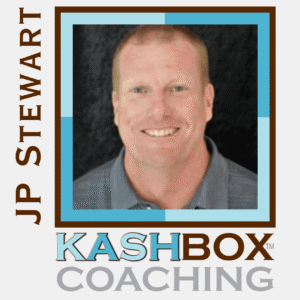
Get In Touch With JP
Prior to his time with Kashbox, JP spent 28 years as an NCAA Lacrosse Coach (22 years as a Head Coach). During that span, JP had the opportunity to coach with & against some of the top lacrosse coaches in the country.
Communication is crucial in any team setting, & also one of the most difficult areas to thrive in. Hearing your people, but more importantly listening to them, is a key component for any leader. As I grew as a leader & communicator I began speaking to the team in more of a conversational tone; I stopped lecturing. I spoke to them on their level. If I couldn’t make my point then it didn’t matter if it was the best point in the world or not. I needed them to hear me, to listen to me.
I learned how to get points across quickly & simply. I changed my style from a lecture hall type mentality to an aquarium type mentality. If I wasn’t able to get my point across immediately I’d lose their attention (the attention span of an 18 year old NCAA Lacrosse player is all too similar to that of the 8 second attention span of your common goldfish). Communication is one of the pillars of any good relationship. Great communication isn’t easy, but it is very important. It is vital to the success of any team or organization.
Every family, team, & organization has obstacles they have to face. Obstacles in some scenarios can be used as excuses. We don’t have enough money to do that. We don’t have the infrastructure. The support isn’t there. We don’t have the resources to do that.
As time went by I realized that the obstacles we faced weren’t going anywhere, so we had to make the best of them. Former US Navy SEAL, author, & podcasterJocko Willink has a term “Good” that he uses often when talking about facing challenges. We adopted it as our own:
- We don’t have the money for that: “Good.” Let’s go figure out a way to earn more money.
- We don’t have the infrastructure: “Good.” Let’s go figure out how to use what we do have.
While facing obstacles never got easier, our mindset shifted our focus away from looking at obstacles in a negative way & instead focusing on how we could use them to our advantage.
There Is No End To The Process
When you truly embrace challenges there will be no end to the process. Good, because this will keep you young.
Constantly seek new knowledge. Learn something new today, so that your tomorrow will invigorate you. An invigorated tomorrow will keep you fresh & ready. Maybe if you’re lucky you’ll wake up a little younger, in your own mind at least, tomorrow than you were today.
Keep a growth mindset, & always show up for those important to you.

Along with his responsibilities as an NCAA Coach, JP has also been a small-business owner for the past 22 years. He founded & built a successful lacrosse camp business that, in addition to camps, expanded into travel teams, clinics, lessons, & consultations.
In both of his careers as an NCAA Coach & small-business owner, JP has helped to teach, coach, mentor, & develop hundreds of players & coaches.